The product
Get Part connects people who need a car part with the businesses that sell them. A garage, a driver or an appraiser enters a plate number, picks the parts they need and sends one request. Parts dealers and dismantlers who carry that make get the request straight away, reply with a price and a note, and the customer compares the offers and calls the one they like.
It runs as a web app for customers and suppliers, and an admin panel for the team. The screenshots use demo data, with the interface translated into English. They show the current version, which other developers have extended since I left.
My part
I worked on the frontend of both apps from April 2023 to October 2024, after the first version was built. I wrote 95 of the 373 commits in the web app and 21 of the 81 in the admin panel. The backend was another team's. My work was mostly the supplier side:
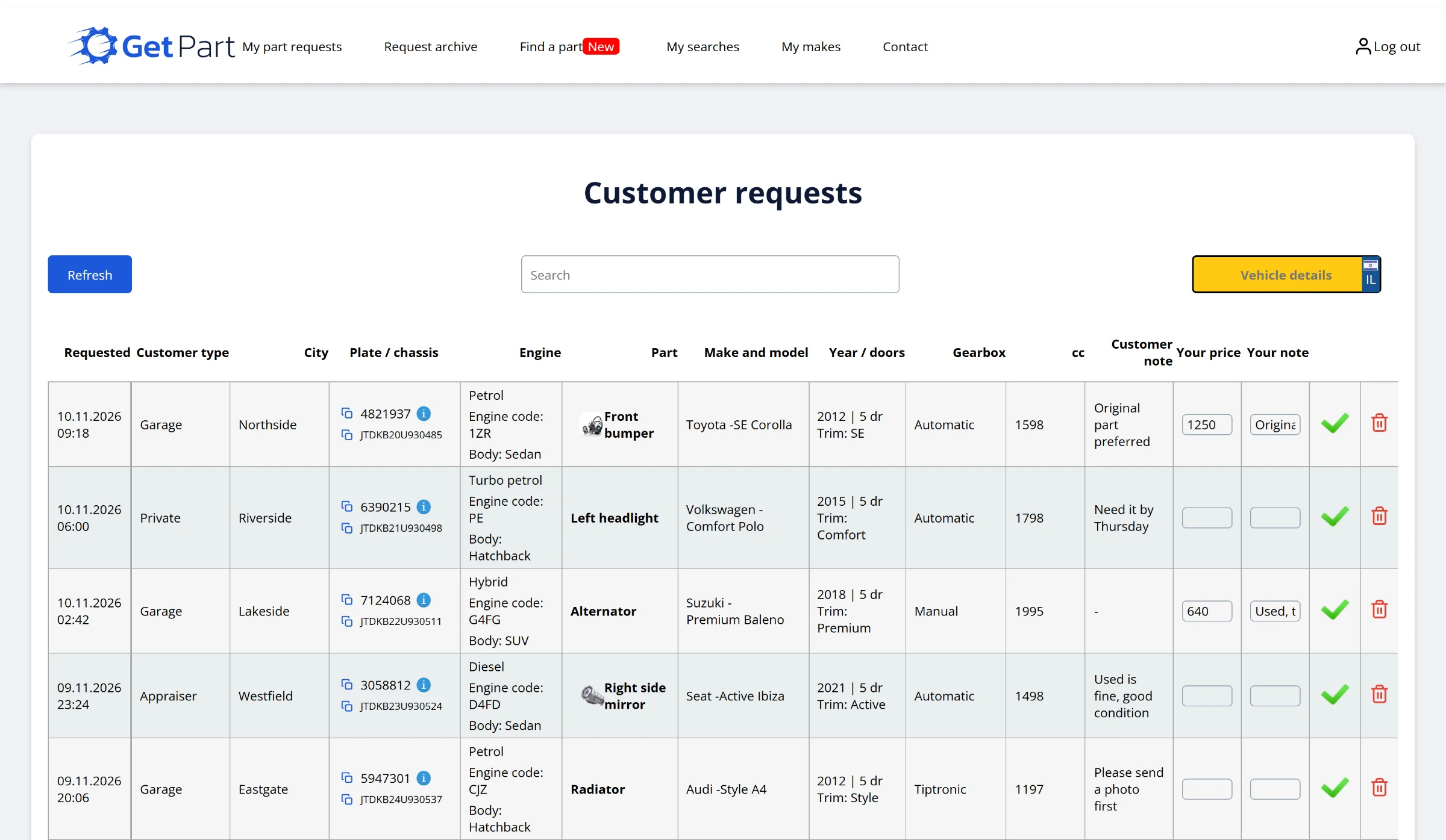
The customer requests screen suppliers work from every day, on desktop and mobile
The supplier archive, with a filter for requests they have priced
The page where suppliers choose which makes they supply
The customer's archive, printing requests, and an extra phone number on sign-up and in supplier replies
Plate number lookup wired into the forms, plus engine type, year and doors on every request
In the admin panel: the latest requests screen with filters, reply counts, the replies to each request, replying as a supplier, and assigning makes to a supplier
The supplier's inbox
A supplier can get dozens of requests a day, and each one has to be answered quickly to win the sale. I built the screen as a dense table: when the request came in, who sent it, the plate and chassis numbers with copy buttons, the engine, the part with its photo, the make, model, year and gearbox, and the customer's note. The price and note fields sit on the same row, so a supplier can answer without opening anything. A request can be sent, deleted or archived, and a whole page can be archived at once.
The screen at the top of this page is that table. On a phone the same requests turn into cards, with the offer form under each one.
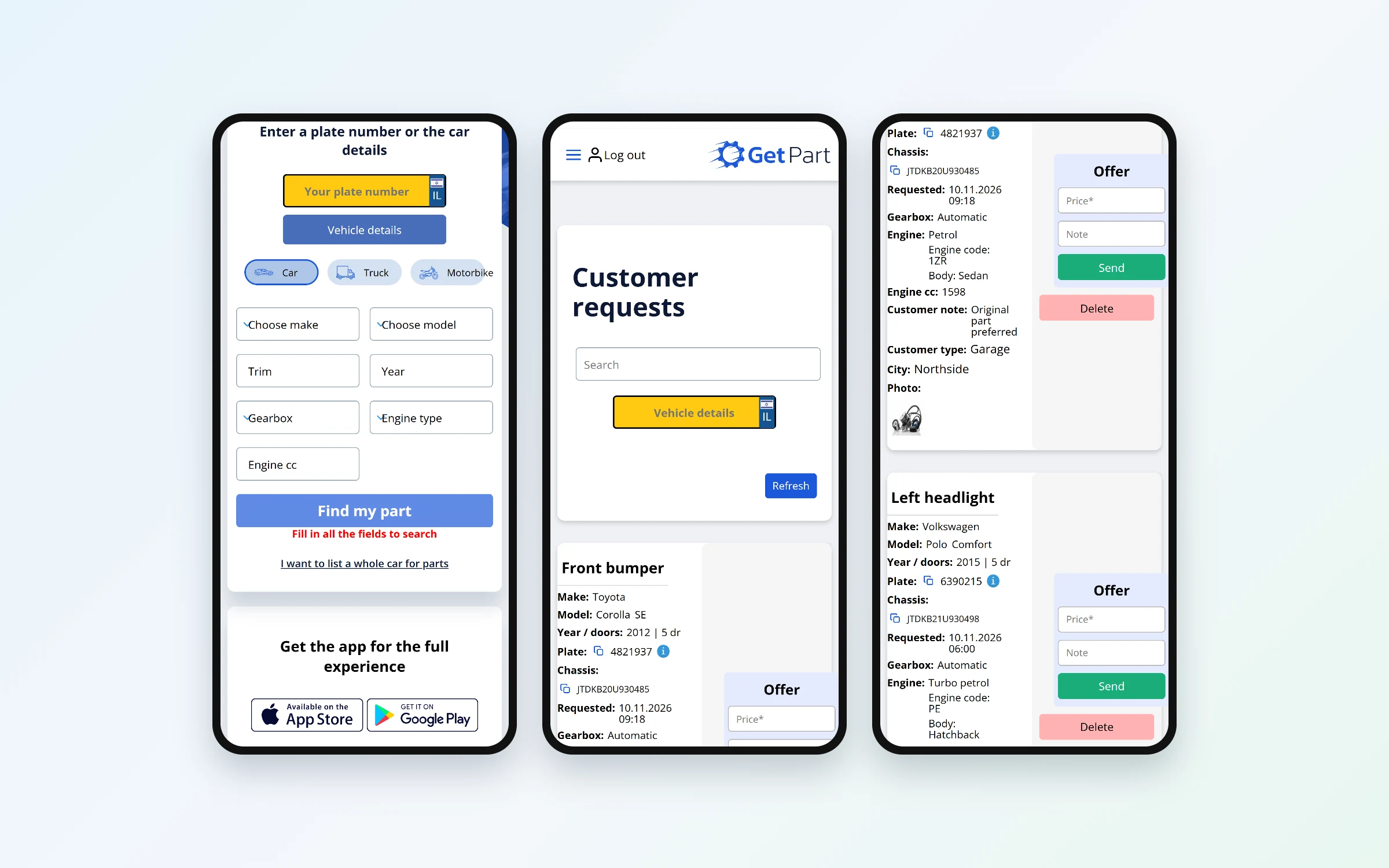
The car search and a supplier's request cards on a phone.
Archive and makes
Answered and archived requests move to an archive with search, paging and a filter for the ones the supplier priced, so they can find a quote they gave last week. Suppliers also choose the makes they carry, for cars, trucks and motorbikes, which decides which requests reach them.
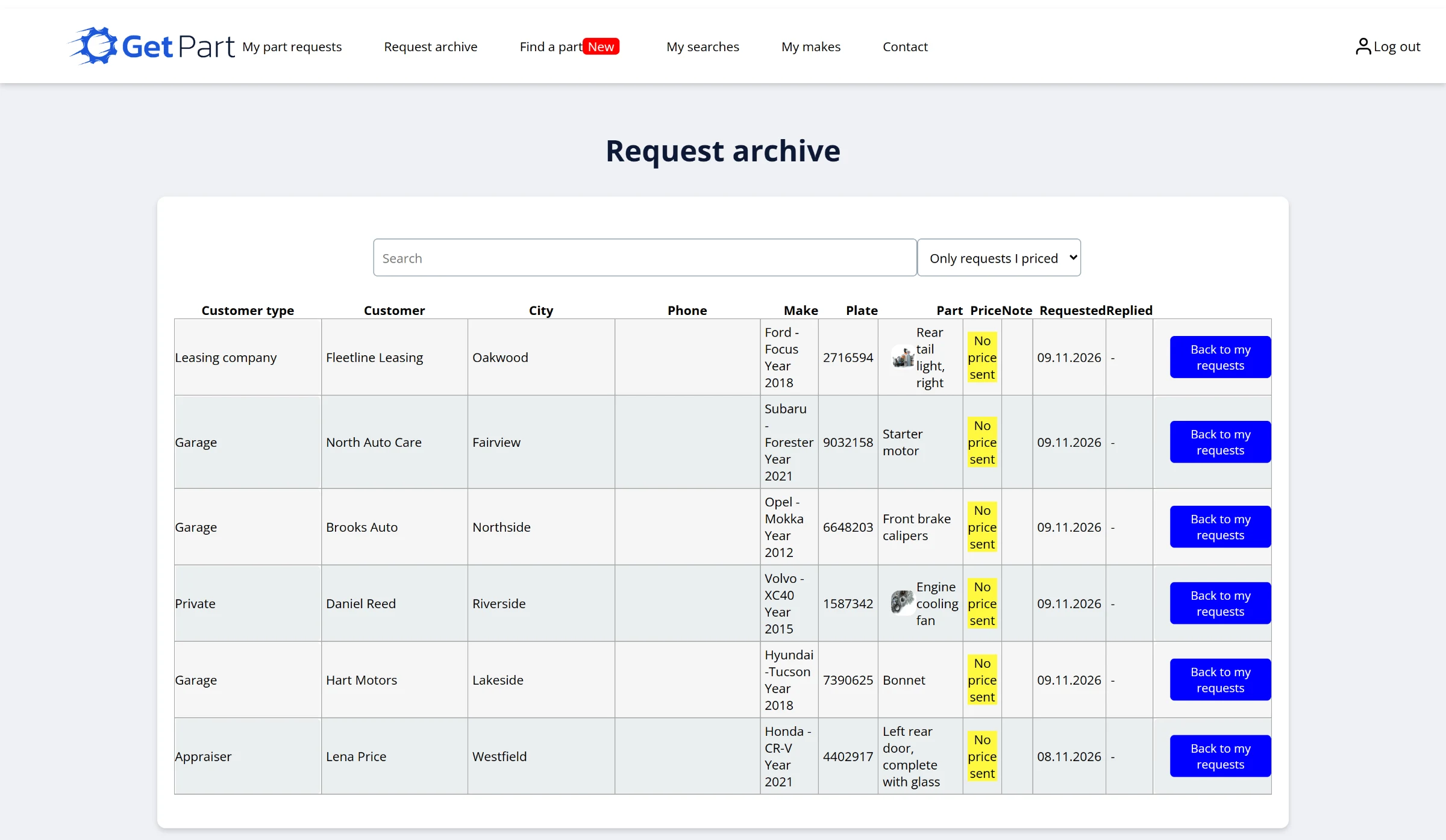
The supplier archive.
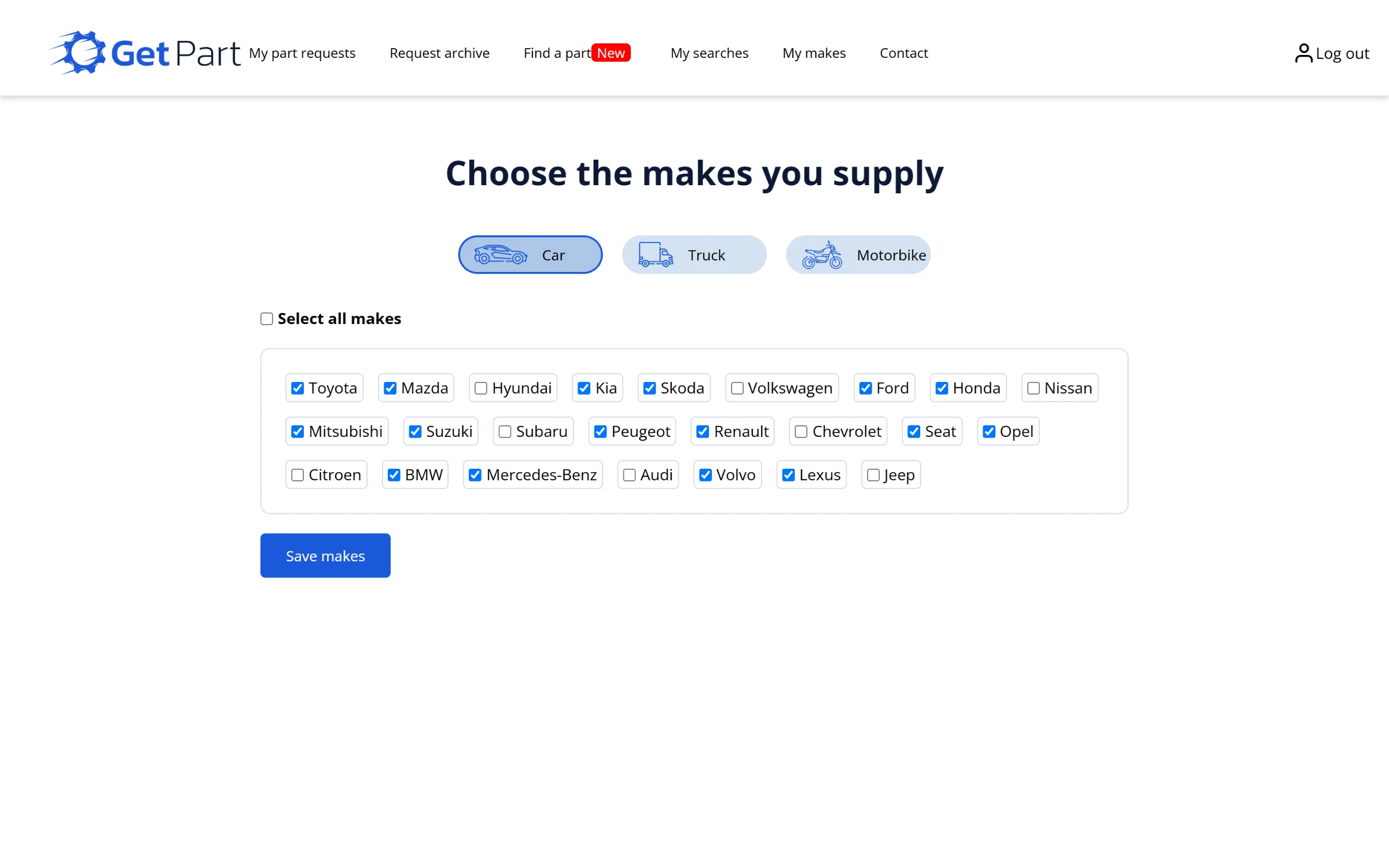
Choosing the makes a supplier serves.
The customer's side
Customers see each request with the number of replies and the best price, and can open it to compare every supplier's price, note, address and phone. I worked on this screen too, including printing selected requests and the archive behind it; other developers have reworked parts of it since.
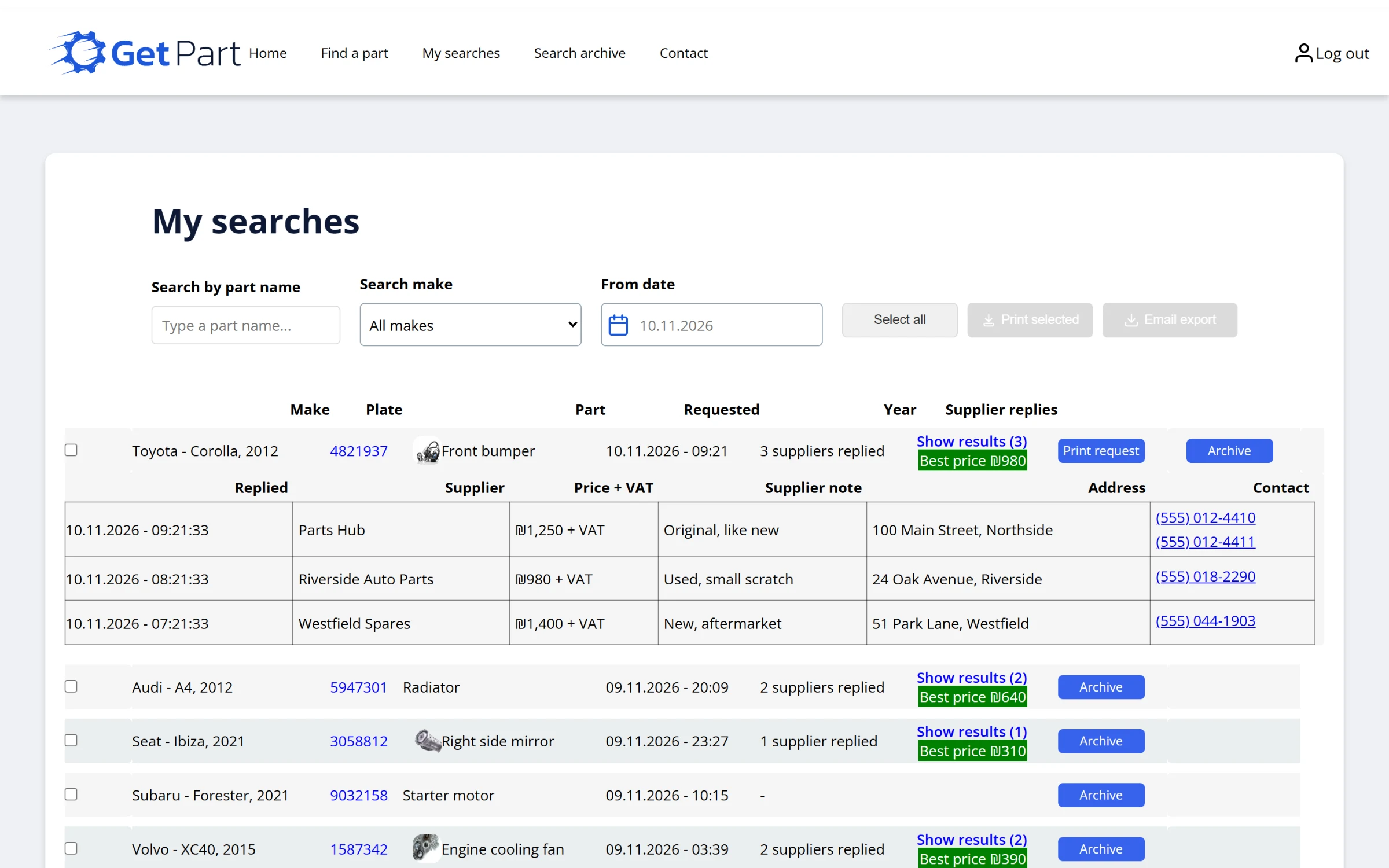
A request with three supplier offers side by side.
The admin panel
I built the admin's view of every request in the system: filters by part, make, model, engine, gearbox and plate, the reply count on each row, the list of replies under a request, and a way for the team to reply on a supplier's behalf.
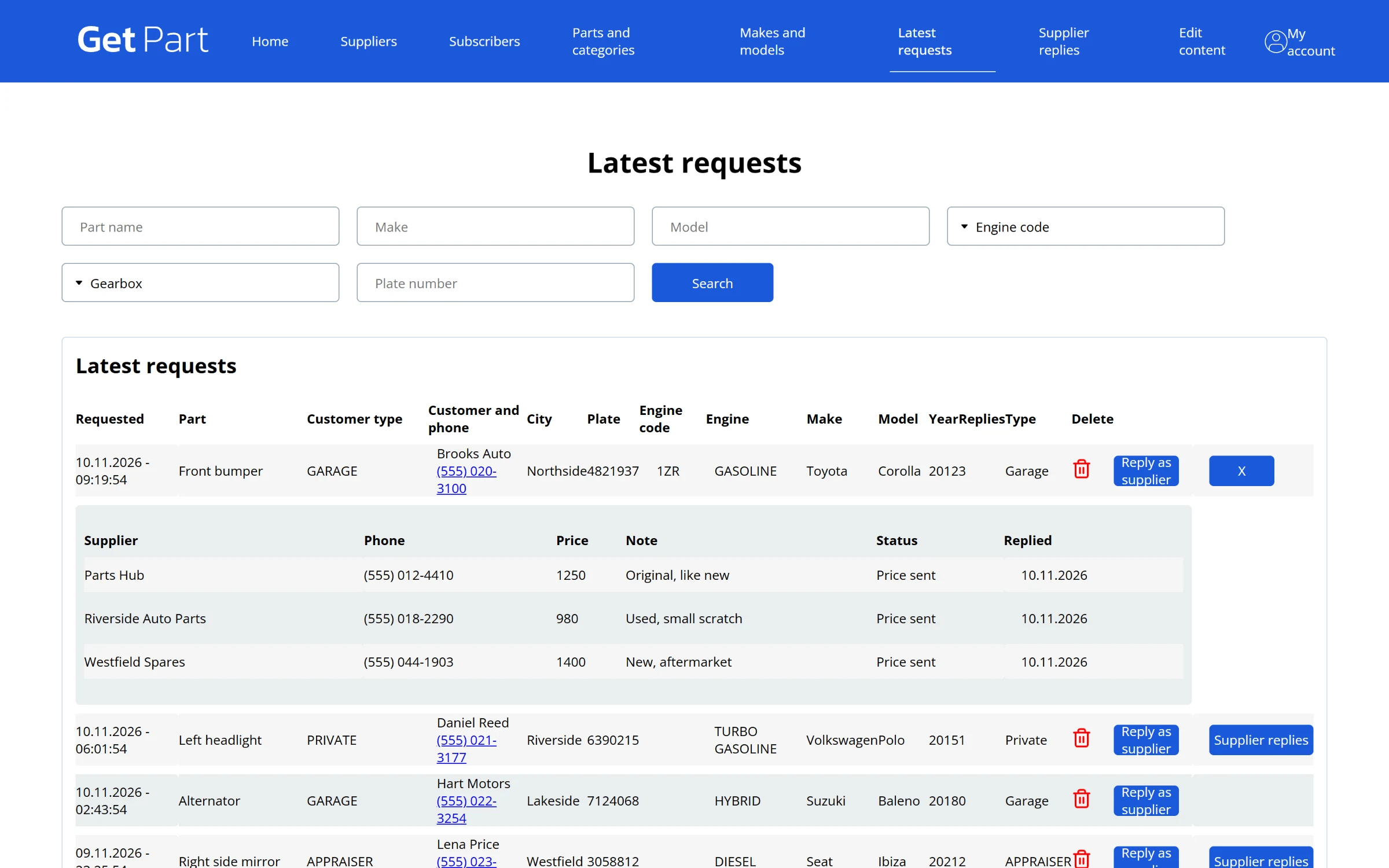
Latest requests in the admin panel, with the replies to one request opened.